
Measuring Workplace Performance: The Metrics That Matter

Key Takeaways
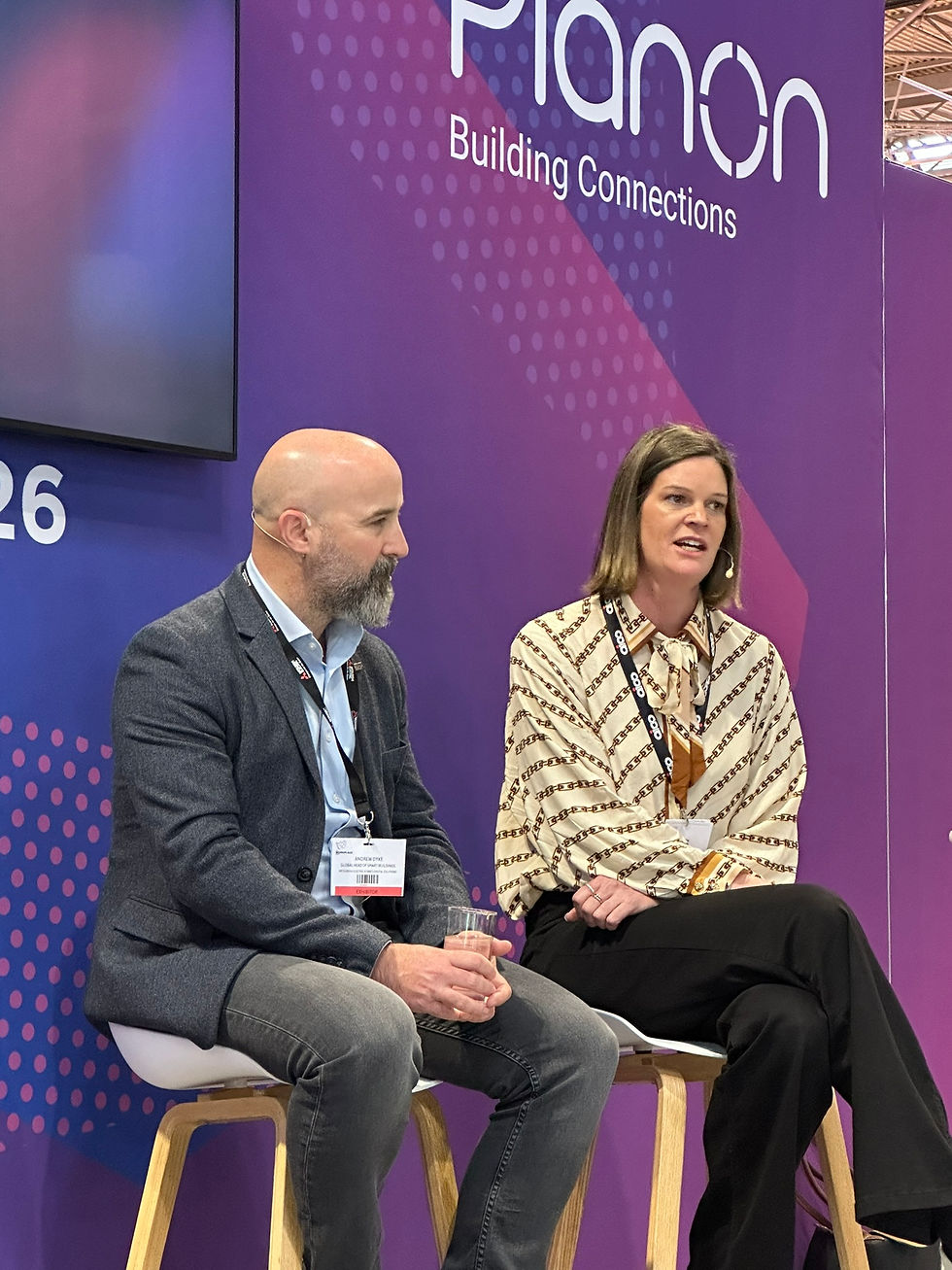
This blog explores key insights from the Mitsubishi Electric Iconics Digital Solutions session at The Workplace Event 2026, featuring Andrew Dyke, Samuel Walton, and guest speaker Jane Watson from XY Sense. The discussion examined why organizations often struggle to turn workplace data into meaningful operational decisions and what needs to change. You’ll:
Learn why many organisations become “data rich but insight poor” despite collecting large amounts of workplace and building data
Understand the differences between attendance, occupancy, and utilisation metrics and why those distinctions matter
Discover why workplace analytics should begin with business objectives rather than dashboards alone
Explore how interoperability and connected smart building platforms support better workplace intelligence
See why workplace optimisation requires continuous adaptation rather than one-time technology deployments
Why Organisations Still Struggle to Make Confident Workplace Decisions
Most organisations already collect massive amounts of workplace data. Badge systems track entry activity. Booking systems capture reservations. Wi-Fi networks monitor connected devices, and every second, smart building systems generate enormous amounts of operational information.
Yet many companies still struggle to answer relatively simple questions:
How much office space do we actually need?
Which workplace environments actually support productivity?
Why are some offices thriving while others remain underutilized?
Which workplace investments genuinely improve employee experience?
How do occupancy patterns affect energy use and operational efficiency?
That contradiction became the focus of a recent session hosted by Mitsubishi Electric Iconics Digital Solutions at The Workplace Event 2026, held April 28–30 at the NEC Birmingham in the UK.

The session, titled Measuring the Office: The Metrics That Matter, featured:
Samuel Walton, Industry Growth Manager – Smart Buildings at Mitsubishi Electric Iconics Digital Solutions
Andrew Dyke, Managing Director – Smart Buildings UK at Mitsubishi Electric Iconics Digital Solutions
Jane Watson, General Manager – UK & Europe at XY Sense
The panel explored a growing challenge facing workplace leaders across commercial real estate, corporate occupiers, and smart building environments: organisations are collecting more workplace data than ever before, but many still lack the operational clarity needed to make confident decisions.
Why Workplace Analytics Often Creates “Data Rich, Insight Poor” Organisations
One of the most important observations during the discussion came from Jane Watson, who described many organisations as becoming increasingly “data rich and insight poor.” That distinction matters.
Modern workplaces generate enormous amounts of data, but raw information alone does not create useful intelligence. In many environments, disconnected systems produce fragmented metrics that lack context, consistency, or operational alignment.
Organisations often rely on badge access data, room booking systems, Wi-Fi analytics, occupancy sensors, energy systems, and workplace applications, yet many of these systems still operate independently from one another. The result is a fragmented understanding of how workplaces actually function.
As Samuel Walton noted during the session, major real estate decisions are often being made using “fragmented, dated, or sometimes completely blind data spots.”
That creates risk because workplace decisions are no longer just about square footage. Workplace strategy now affects employee experience, collaboration, operational efficiency, sustainability, and long-term real estate planning.
Attendance vs Occupancy vs Utilisation: Why Workplace Metrics Are Often Misunderstood
One of the strongest parts of the session focused on terminology specifically the confusion surrounding workplace metrics themselves. Organisations frequently use terms like attendance, occupancy, and utilisation interchangeably, even though each metric measures something very different.
Andrew Dyke explained the distinctions clearly:
Attendance measures who entered a building
Occupancy measures who is actively present within a space in real time
Utilisation measures how frequently a space is used over time
Capacity utilisation measures whether spaces are appropriately sized for actual usage patterns
Those differences matter because each metric answers a different operational question. A badge swipe may confirm someone entered a building, but it does not explain:
Where employees spent time
Whether meeting rooms were actually used
Whether collaborative spaces supported productivity
Whether workplace layouts align with actual employee behaviour
Without contextual understanding, organisations risk optimising the wrong things.
Why Workplace Analytics Should Start with Business Objectives Instead of Dashboards
Another major theme from the session centered around a surprisingly simple question: What problem are you actually trying to solve? According to both Andrew and Jane, workplace analytics initiatives often fail when organisations begin with technology instead of operational objectives.
The panel repeatedly emphasised that different organisations require different workplace strategies.
Financial institutions may prioritize high-performance workstations and connectivity.
Research-driven organisations may prioritise collaboration and creativity.
Hybrid organisations may focus more heavily on flexibility, employee experience, and adaptive workplace utilisation.
The “right” metrics depend entirely on organisational priorities. That idea challenges one of
the most common assumptions in workplace analytics: more data automatically leads to better decisions.
In reality, data only becomes valuable when organisations clearly define:
What success looks like
Which workplace behaviors they want to support
Which operational outcomes actually matter
How Smart Buildings Create a Unified Workplace Data Layer
One of the most forward-looking concepts discussed during the session was the idea of the building “digital fabric.” Andrew described how modern smart building environments increasingly depend on integrating data from multiple systems into a unified operational framework.
That framework includes:
occupancy sensors,
booking systems,
HVAC infrastructure,
workplace applications,
energy systems,
environmental controls,
and operational building data.
When normalised and connected within a common data layer, these systems create opportunities far beyond workplace reporting alone.
Integrated workplace intelligence can support:
automated energy optimisation,
intelligent wayfinding,
real-time room availability,
adaptive environmental controls,
workplace experience improvements,
and more informed real estate planning.
The important shift is not simply collecting more workplace data but is creating interoperable environments where operational systems work coherently together.
Another important insight from the session involved long-term adaptability. Andrew emphasised that workplace intelligence is not a one-time deployment project. Smart building strategies evolve continuously alongside workforce behaviour, operational priorities, and organisational culture. That reality has major implications for technology selection.
Organisations increasingly need platforms capable of interoperability, scalability, continuous integration, and long-term flexibility. As workplace environments evolve, disconnected point solutions create operational limitations. Long-term success depends on creating adaptable digital ecosystems capable of evolving alongside the workplace itself.
As Andrew summarised during the session:
“Digital ability, data ability is a journey. It evolves as much as your workplace evolves.”
The future of workplace strategy will not be defined by how much data organisations collect. Success will depend on how effectively organisations connect, interpret, and act on workplace and building intelligence to support better operational, employee, and real estate decisions.
Workplace analytics should do more than generate dashboards. A modern workplace intelligence strategy should help organisations understand how people actually use spaces, how buildings support performance, and how technology can create more adaptive, efficient, and human-centered environments.
Continue the Workplace Analytics Conversation
Want to continue the conversation around workplace analytics, occupancy intelligence, interoperability, and smart building strategy?
Speak with one of our workplace management/smart building experts to explore how connected workplace and building platforms can help your organisation improve operational visibility, workplace performance, and decision-making.
Frequently Asked Questions About Workplace Analytics and Occupancy Data
The following questions summarise common themes discussed during the Mitsubishi Electric Iconics Digital Solutions session at The Workplace Event 2026.
Why are organisations struggling with workplace analytics?
Many organisations collect large amounts of workplace and building data but lack integration, normalisation, and operational context. Disconnected systems often produce fragmented insights that make decision-making difficult.
What is the difference between attendance, occupancy, and utilisation?
Attendance measures who entered a building. Occupancy measures who is actively present within a space in real time. Utilisation measures how frequently spaces are used over time.
Why is badge access data alone insufficient?
Badge access data only confirms building entry. The information does not explain how spaces are used, where employees spend time, or whether workplace layouts support productivity and collaboration effectively.
What is meant by the “digital fabric” of a smart building?
The “digital fabric” refers to a connected operational framework where workplace systems, sensors, applications, and building technologies share normalised data within a unified platform.
Why is interoperability important in workplace technology platforms?
Interoperability allows organisations to combine data from workplace systems, occupancy sensors, HVAC infrastructure, energy systems, and applications into unified operational intelligence that supports automation and better decision-making.
What is the biggest mistake organisations make with workplace analytics?
Many organisations start with dashboards and technology instead of clearly defining the operational problems they are trying to solve and the workplace outcomes they want to achieve.


Comments