
Street to Seat: Why Mobile Access Is Shaping the Next Smart Workplace Experience

What You’ll Learn in This Blog
Why mobile access is becoming the natural next step in workplace experience
How mobile access is reshaping employee and visitor expectations
What mobile credentials enable behind the scenes and why it matters
How Human Interface Devices and Mitsubishi Electric Iconics Digital Solutions intersect in the mobile access ecosystem
Why security is strengthened, not compromised, by mobile access
Where adoption of mobile access is accelerating and why the shift is happening now
How mobile access fits into the broader smart building landscape
How Mobile Access Is Transforming the Connected Workplace
Most people already operate in a mobile-first rhythm without noticing. Phones unlock cars, enable payments, validate travel, and support communication in seconds. Mobile experiences have integrated into daily life to the point where the technology fades into the background.
PropTech 2025, a global thought leadership event exploring the future of smart buildings and workplace technology, examines how these everyday behaviours are influencing expectations inside commercial environments.
During a fireside chat moderated by Sam Walton, Industry Growth Manager for Smart Buildings at Mitsubishi Electric Iconics Digital Solutions, the discussion focused on mobile access and workplace experience. The session featured:
Dominic Bruning, Director of Strategic Alliances for HID (Human Interface Devices) in EMEA (Europe, Middle East, and Africa)
Andy Dyke, Managing Director (UK) and Global Head of Smart Buildings at Mitsubishi Electric Iconics Digital Solutions
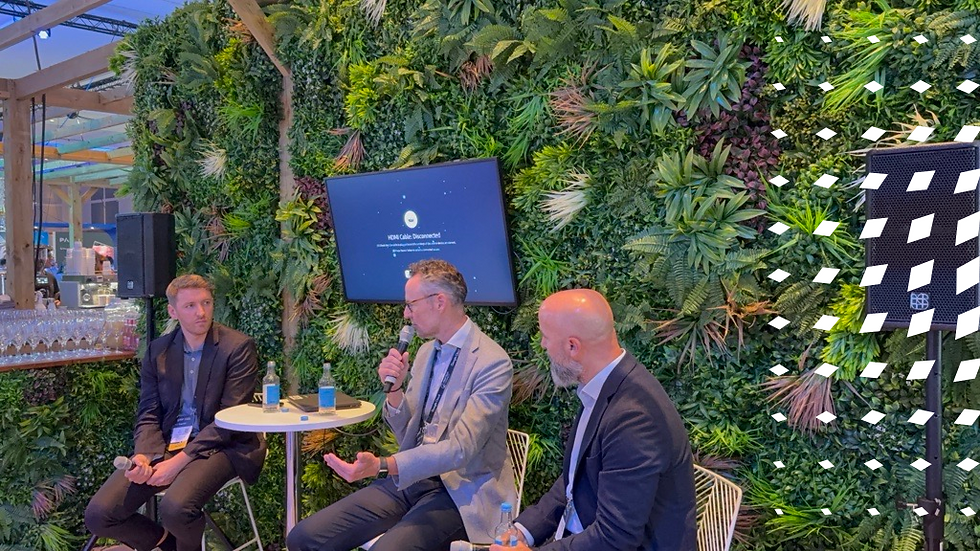
Dominic and Andy explored how mobile credentials are redefining how people enter and move through buildings and why adoption continues to accelerate.
This blog highlights key insights from that discussion, focusing on how mobile access is reshaping workplace expectations and what this shift means for building owners, operators, and occupants. This shift becomes even clearer when viewed through generational differences in how people expect to access and interact with buildings.
A Generational Shift Towards Mobile-First Workplace Access
One of the most relatable moments came when Dominic contrasted his comfort with physical access badges to his daughter’s mobile-first world. For her generation, the phone functions as the gateway to payments, transportation, communication, and identity, so access should naturally follow.
This story captured a broader shift across the workforce. Digital natives expect mobile experiences everywhere, while long-tenured professionals may still appreciate the familiarity and symbolism of a badge.
Rather than framing this as a divide, the panel emphasized that both preferences can coexist. Because mobile aligns closely with everyday behaviour, adoption will increase organically as younger generations influence technology decisions in real estate, facilities management, and corporate environments.
The movement is not about replacing habits overnight but meeting the workforce where daily life already happens: on mobile.
Why Street to Seat Defines the Next Wave of Workplace Experience
The phrase street to seat surfaced during the conversation and quickly became a defining theme. The concept reflects the expectation that someone should move from sidewalk to workspace quickly and without friction.
No digging for badges
No queues
No turnstile pauses
No uncertainty about access
Mobile access reshapes this journey far beyond unlocking the door:
Turnstiles become seamless tap-and-go moments
Elevator permissions activate automatically
Secure printing and shared services authenticate without PINs
Parking or EV charging can be tied to identity
Room booking and workplace services integrate through connected platforms
Visitors benefit just as much from a streamlined arrival experience. Today, many workplace platforms support fast, secure entry through pre-issued credentials or one-time access methods such as QR codes, reducing check-in friction and setting a professional tone from the start.
As Andy noted, these first few minutes can shape the entire day. A smooth arrival signals modernity, efficiency, and care and reflects how well the workplace experience has been designed from the very first interaction.
Inside the Mobile Access Ecosystem: How Smart Buildings Make It All Work
From the outside, mobile access appears effortless. Behind every tap, however, is an integrated digital ecosystem:
Cloud platforms that validate credentials
Application programming interfaces (APIs) and software development kits (SDKs) that enable secure integrations
Mobile wallets that authenticate identity
Readers and controllers that manage access points
Smart workplace applications that unify building services
This is where HID and Mitsubishi Electric Iconics Digital Solutions intersect. HID provides secure identity technologies that make mobile credentials trustworthy and scalable. Mitsubishi Electric’s smart building platforms connect those credentials to workplace services, automation, and unified experiences.
A key takeaway from the panel: a complete mobile access solution depends on collaboration across hardware, software, cloud, and mobile platforms, bringing together integrated, intelligent systems that replace isolated applications.
Mobile Access Security: Why It Is Stronger Than Traditional Badges
Security questions arose naturally, and the panel addressed those concerns clearly. Mobile access benefits from the same trusted security ecosystems used for banking and payments. Platforms such as Apple Wallet and Google Wallet incorporate:
End-to-end encryption
Rotating security keys
Biometric and passcode authentication
Device-level protections
Remote wipe capabilities
A misplaced phone often presents less risk than a lost badge. A badge can be used immediately, while a phone requires authentication and can be disabled remotely. Dominic reinforced that cybersecurity forms the foundation of mobile access. HID and its partners must demonstrate compliance, regional data sovereignty, and continuous security validation.
Mobile access combines strong protection mechanisms with a seamless user experience, raising both security standards and usability expectations for modern workplaces.
Where Mobile Access Adoption Is Accelerating Around the World
Mobile access adoption is accelerating fastest in global cities such as London, Warsaw, New York, Chicago, and Frankfurt, particularly in newer developments. Tech-forward tenants and modern infrastructure are setting the pace in these markets.
However, the speakers stressed that transformation does not require a complete overhaul. Buildings can implement mobile access incrementally, aligned with infrastructure upgrades, budgets, and readiness.
Mobile is not an all-or-nothing shift. The journey can be flexible and thoughtfully paced.
The Future of Access: Why Hybrid Models Still Matter
Mobile access continues to gain momentum, but most organizations do not transition overnight. Existing infrastructure, operational workflows, and user habits require a more gradual approach.
Large enterprises often operate across multiple sites with established identity systems and processes. In these environments, a hybrid model supports a practical path forward.
A hybrid approach enables:
User choice based on preference and role
Organizational flexibility across locations and systems
Gradual adoption aligned with infrastructure upgrades
This approach allows organizations to modernize access without disruption, supporting both current operations and long-term digital workplace strategies.
Mobile Access as the Front Door to the Smart Building Ecosystem
The fireside chat positioned mobile access as part of a broader shift in how buildings operate and deliver value. Access is no longer an isolated function. Digital credentials now act as the entry point to a connected ecosystem of workplace services and building systems.
Several clear patterns emerged from the discussion:
Access is becoming digital
Digital access unlocks connected workplace services
Connected services rely on integrated smart building platforms
In this context, the Intelligent Building Software Stack (IBSS) from Mitsubishi Electric Iconics Digital Solutions becomes essential. As a workplace management platform, IBSS provides applications for desk, room, and resource booking, wayfinding, visitor management, catering services, and workplace experience tools. The platform delivers the user-facing layer that shapes how occupants and visitors interact with the building.
A building operations system is required to monitor, manage, and control building infrastructure. A system such as GENESIS from Mitsubishi Electric Iconics Digital Solutions connects automation, environmental controls, energy systems, and access control infrastructure into a unified environment. Integration between IBSS and GENESIS enables a seamless connection between digital identity, workplace services, and building operations, aligning user experience with underlying building performance.
As buildings shift toward mobile-first experiences, optimal outcomes depend on strong alignment between workplace applications and building systems, ensuring a consistent and reliable experience across the entire environment.
Mobile access is becoming the front door to a more connected workplace, supported by platforms that connect user experience with building operations.
Mobile Access Creates a Smarter, Seamless Workplace Journey
Mobile access is more than a new way to open a door. The shift reshapes how people interact with buildings and what they expect from the workplace. Key outcomes of this shift include:
Alignment with real-world behaviours
Smoother, more intuitive journeys
Stronger security across access points
Greater collaboration across technologies and providers
Flexible, gradual adoption paths
The future of access is not about choosing between cards or phones. The goal is to help people move confidently, securely, and seamlessly from street to seat.
These themes prompted several practical questions during the discussion, and organizations evaluating mobile access often raise similar considerations. The following FAQ section addresses the most common points.
Frequently Asked Questions About Mobile Access and Smart Workplace Technology
Does mobile access replace physical badges?
Not immediately. Many organizations adopt a hybrid model where badges and mobile credentials coexist. The transition can be gradual and aligned with readiness and infrastructure upgrades.
Is mobile access more secure than badges?
Yes. Mobile credentials benefit from encryption, biometrics, device-level protections, and remote wipe capabilities. A lost phone is harder to misuse than a lost badge.
What happens if someone’s phone battery dies?
Mobile access platforms support backup features, and organizations can maintain secondary credential options such as temporary badges or PIN-based access.
Does mobile access require replacing all hardware?
Not always. Many readers, controllers, and platforms support incremental upgrades. Buildings can modernize at a pace that fits budgets and operational priorities.
How does mobile access connect to smart building services?
Mobile credentials can link directly to workplace apps and automation systems, enabling services such as room booking, elevator control, EV charging, and secure printing.
Start Building a Mobile-First Workplace Experience
Explore the IBSS product page or speak with a smart building specialist to evaluate your mobile access strategy and define the next phase of your workplace transformation.


Comments